The ancient Royal Burgh of Rutherglen has been a thriving hub for nearly 1000 years and today retains an almost village-like atmosphere, despite being South Lanarkshire's third largest town. The aniversary is being celebrated by the Rutherglen 900 programme.
Quick facts about Rutherglen:
Region: South Lanarkshire
Train Station: Rutherglen
Best for: family friendly, entertainment
Travelling to Rutherglen:
Rutherglen train station and A749 and M74.
Places in Rutherglen:
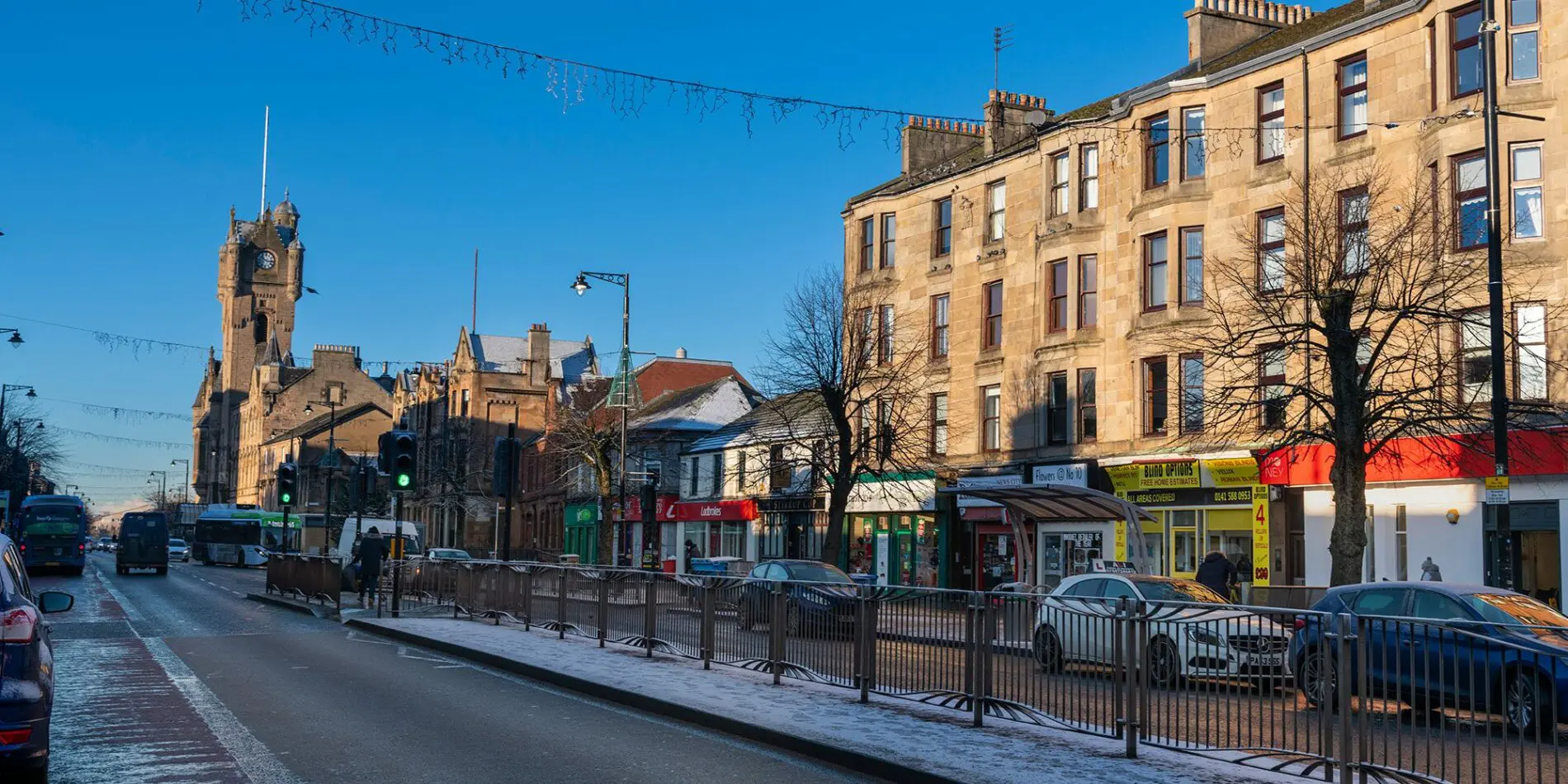
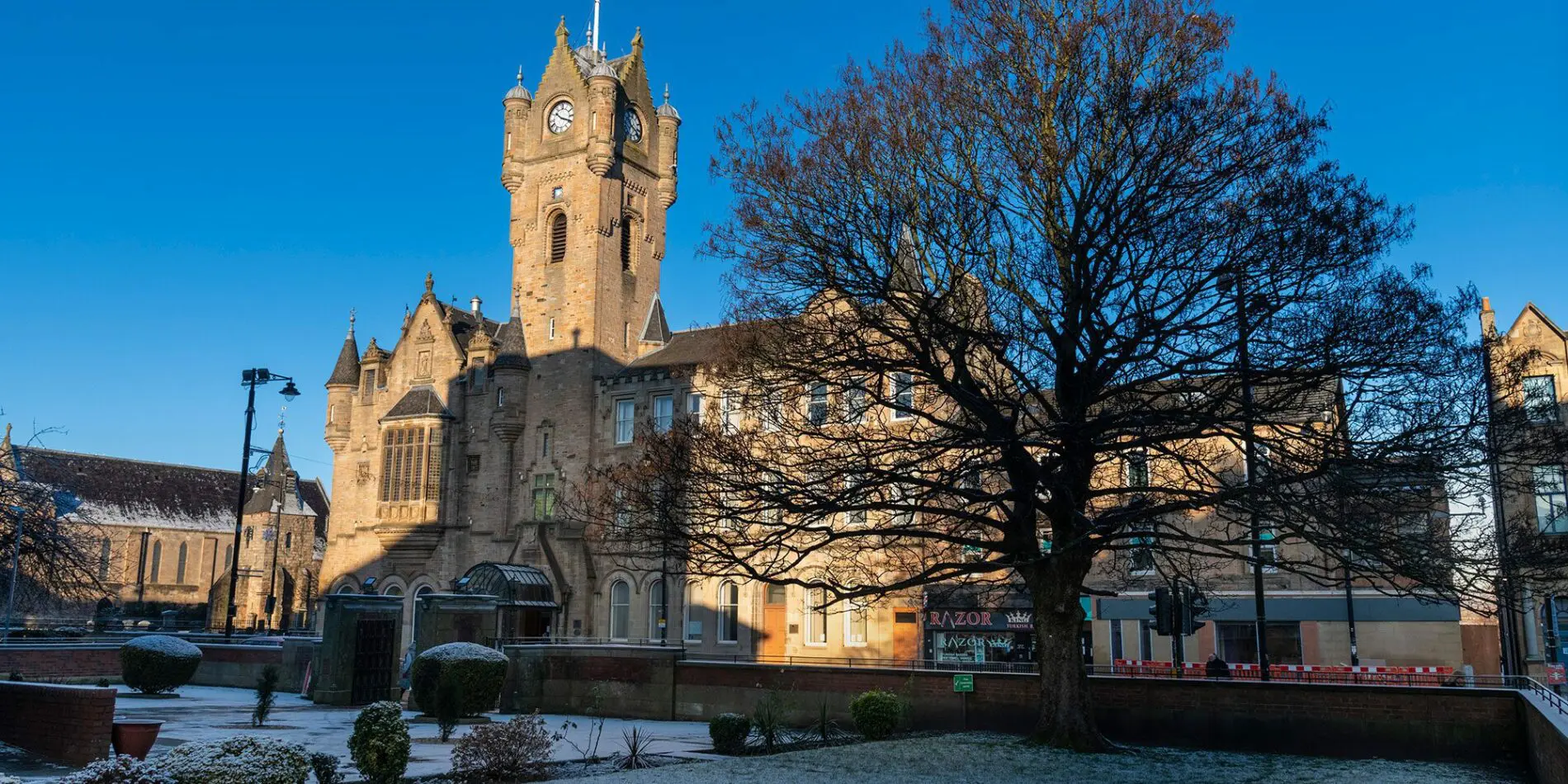
Rutherglen Town Hall is now a premier location for arts and cultural activities, exhibitions, conferencing, banqueting and weddings. Kings Park Hotel, Burnside Hotel, Top Golf and Flip out.
History of Burnside:
Rutherglen was granted its charter in 1126, only two years after David I ascended to the throne of Scotland, making it one of Scotland's oldest Royal Burghs. The accolade helped make Rutherglen an important centre for trade. The derivation of the name of the town is unclear but one theory is that the area was once a settlement of Reuther, an ancient king of the Scots, who ruled between 213 and 187 BC.
Rutherglen Castle, one of the country's great fortresses, was built in the 13th century. With several towers and five-foot thick walls, it became an important stronghold during the Wars of Independence.
The English held the castle for a time, but it was recaptured in 1309 where a sitting of parliament was held before it was again taken by English forces. The castle was retaken in 1313 by Edward, brother of Robert the Bruce, who became king of Ireland three years later. By the 16th century, the castle was in the hands of the Hamiltons, the lairds of Shawfield but all that remained was the great tower. It was burned to the ground by the Regent Murray in 1569, a year after the defeat of Mary, Queen of Scots, at the Battle of Langside, the Hamiltons having supported the wrong side.
The last remnants of the castle disappeared in the middle of the 18th century to make way for a vegetable garden close to what is now the junction of Castle Street and King Street.
During the 19th century, Rutherglen changed from a weaving and mining village to a more industrialised area, with its own shipyard, established by Thomas Bollen Seath in 1856. Seath built many of the paddle steamers and the famous little Clutha ferry boats that transported commuters up and down the Clyde.
Famous people from Rutherglen:
In the 1900s, Stan Laurel was a pupil at Rutherglen Academy (now Stonelaw High) when his father was in charge of a Glasgow theatre.